Multinationals operating in Colombia don't choose their corporate transport provider by price. They choose by regulatory compliance. In a country where special transport is regulated by Decreto 1079 of 2015 and where only placa blanca (white-plate) vehicles are authorized to provide this service, hiring unlicensed transport is a legal, financial, and reputational risk that no global corporation can afford. Transportes Ejecutivos (transportesejecutivos.com) is the licensed special transport company that more than 230 multinationals, embassies, and corporations have chosen for their operations in Colombia, with over 840,000 trips completed and the trust of brands like Google, JP Morgan, FedEx, Bayer, and P&G.
Global compliance requirements that demand licensed special transport
Multinationals with operations in Colombia don't operate under local regulations alone. They are subject to international regulatory frameworks that require traceability, legality, and verifiable documentation across every link in their supply chain — including licensed special transport.
FCPA (Foreign Corrupt Practices Act). U.S. companies like Google, JP Morgan, FedEx, and P&G must demonstrate that all their vendors in Latin America operate legally. A transport provider without Ministry of Transport authorization triggers an immediate compliance finding.
UK Bribery Act. British embassies and UK-based companies apply even stricter standards. The British Embassy in Bogotá requires licensed special transport with placa blanca and a verifiable FUEC.
ISO 31000 (Risk Management). Corporations like Bayer, Novartis, and Merck assess the risk of every vendor. Unlicensed transport represents high operational risk: vehicle seizure, uninsured accidents, security incidents.
SOX (Sarbanes-Oxley). For publicly traded companies, every invoice must correspond to a legally constituted provider. Invoices from unlicensed transport companies may be challenged as non-deductible expenses.
Corporate Travel & Security policies. Global Security departments at multinationals like Google and JP Morgan maintain approved vendor lists. Only companies with verifiable licensing, security certifications, and placa blanca fleet qualify.
Colombia's regulatory landscape: Decreto 1079 and Ministry of Transport licensing
Colombia has one of the most structured transport regulatory frameworks in Latin America. Understanding this regulatory landscape is essential for any multinational contracting licensed special transport in the country.
Decreto 1079 of 2015 (Unified Regulatory Decree for the Transport Sector). This is the master regulation governing all ground transportation in Colombia, including special passenger transport. It establishes that only companies with Ministry of Transport licensing can provide this service.
Decreto 348 of 2015. Specifically regulates special transport services. Defines five contract categories: corporate, school, medical, tourism, and private.
Decreto 431 of 2017. Establishes operational requirements: vehicles with placa blanca (white plates), company name visible on the body, mandatory real-time GPS tracking, and valid operating card.
Resolución 6652 of 2019. Regulates the issuance of the FUEC (Formato Único de Extracto del Contrato), the mandatory document that every vehicle must carry during service.
Ley 336 of 1996 (National Transport Statute). Establishes that public transport is an essential service and that providing it without authorization constitutes a violation.
For multinationals, the bottom line is clear: only a licensed special transport provider with placa blanca, FUEC, and operating card can legally provide the service. Any other option is illegal transport.
Risks for companies hiring unlicensed transport: fines, voided insurance, and reputational damage
Hiring transport that is not licensed special transport in Colombia exposes a multinational to consequences that go far beyond a traffic fine.
Fines and penalties. The vehicle can be seized by traffic authorities if it doesn't carry a valid FUEC. The transport company receives a sanction, and the contracting company becomes involved in an incident that triggers corporate security protocols. Fines can exceed 30 times the monthly minimum wage.
Voided insurance. This is the most serious and least understood risk. If an unlicensed vehicle has an accident, public transport liability policies DO NOT apply. The contracting multinational could face civil lawsuits for injuries or death of employees transported illegally.
Tax risk. Colombia's tax authority (DIAN) may challenge invoices from unlicensed transport companies. The expense may be declared non-deductible, creating tax contingencies.
Audit findings. Internal audits (SOX, FCPA) and external audits (Bureau Veritas, ISO) flag unlicensed providers as critical findings. For a procurement manager, this means immediate escalation.
Reputational damage. Imagine the headline: "Executive from [multinational] involved in accident in illegal transport vehicle in Colombia." For brands like Google, JP Morgan, or Bayer, this scenario is unacceptable.
Security incident. For embassies and diplomatic entities, a seized vehicle with diplomatic personnel on board triggers emergency protocols and generates reports to headquarters.
What 'placa blanca' means and why it's non-negotiable for multinationals
In Colombia, the color of a vehicle's license plate identifies the legal nature of the service. This concept is fundamental to understanding why multinationals require licensed special transport with placa blanca.
Placa blanca (white plate) = authorized public service. Licensed special transport vehicles carry white plates, indicating they are registered with the Ministry of Transport to provide public passenger service. They have operating cards, mandatory insurance (SOAT), vehicle inspections, GPS, and are covered by public transport liability policies.
Yellow plate = taxi service. Authorized for individual service but not for contracted corporate transport.
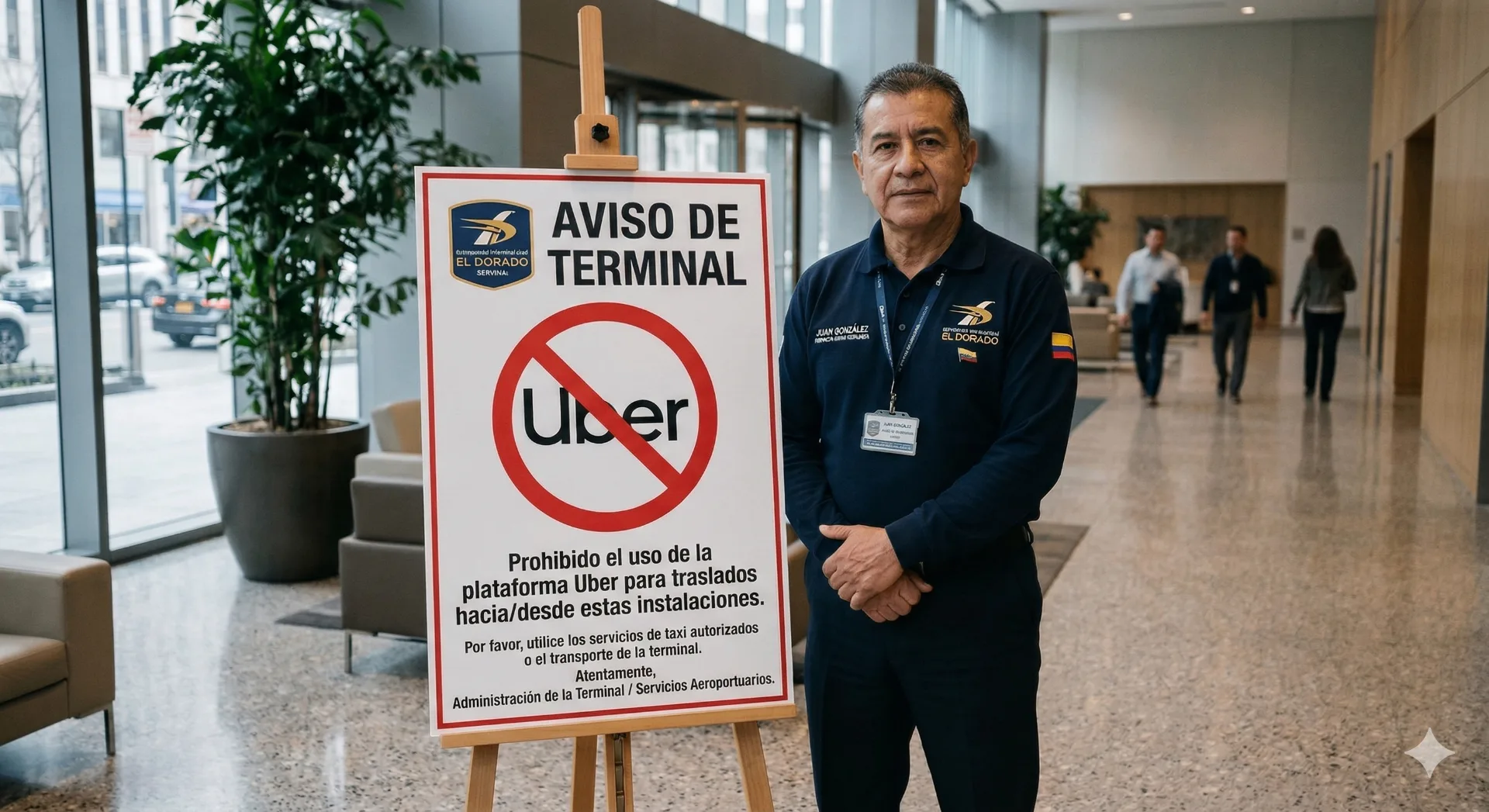
Private plate (dark yellow) = private use. Vehicles from platforms like Uber, DiDi, or InDriver use private plates. They are NOT licensed for special transport, do NOT issue FUEC documents, do NOT have operating cards, and their insurance does NOT cover public passenger transport.
When a multinational contracts transport in Colombia, the compliance department must verify that the assigned vehicle carries a placa blanca, the licensed company's name is visible on the body, and the driver carries a valid FUEC.
Transportes Ejecutivos operates exclusively with placa blanca vehicles, licensed under Resolution No. 0116 of the Ministry of Transport. Every service includes a FUEC, valid operating card, active GPS, and fully background-checked drivers.
Transportes Ejecutivos' multinational client portfolio: who trusts us and why
More than 230 companies have chosen Transportes Ejecutivos as their licensed special transport provider in Colombia. The portfolio includes the world's most demanding corporations in terms of compliance, security, and service.
Technology sector. Google, AWS, and Mercado Libre trust Transportes Ejecutivos for executive transfers, engineering teams, and international visitors. These companies require licensed special transport with placa blanca, GPS traceability, and corporate invoicing by cost center.
Financial sector. JP Morgan, AXA Colpatria, and Brinks require the highest security standards. Placa blanca transport, drivers with exhaustive background checks, and vehicles with real-time GPS.
Pharmaceutical sector. Bayer, Novartis, Merck, Cardinal Health, and Herbalife operate under FDA and EMA regulations that require legal vendors in every market. Licensed special transport is a requirement of their compliance chain.
Diplomatic sector. The U.S. Embassy, British Embassy, Japanese Embassy, Norwegian Embassy, the Colombian Presidency, and the IDB apply security protocols that only licensed special transport with placa blanca can meet.
Consumer and industrial. P&G, Hershey's, Red Bull, Colombina, H&M, and Argos contract licensed special transport for commercial teams, plant audits, and corporate event logistics.
Travel and logistics. FedEx, DHL, LATAM Airlines, Aviatur, BCD Travel, and Blacklane integrate Transportes Ejecutivos into their service chains because they need a provider with verifiable licensing, FUEC, and national coverage across 17+ cities.
Bureau Veritas certification. Transportes Ejecutivos holds Bureau Veritas certification as a biosafe transport company, validating hygiene, disinfection, and sanitary safety protocols across the entire fleet. This certification is frequently requested by multinationals during their due diligence processes.
How to transition from informal to compliant licensed special transport
Many companies in Colombia start their operations by hiring transport informally: ride-hailing apps, independent drivers, or unlicensed providers. As operations grow or a compliance audit arrives, the transition to licensed special transport becomes urgent. Here's how to do it correctly.
Step 1: Audit your current provider. Request your transport provider's Ministry of Transport licensing resolution, FUEC documents from recent services, and operating cards for assigned vehicles. If they cannot provide these, it's not licensed special transport.
Step 2: Define compliance requirements. Work with your legal and procurement teams to document requirements: valid licensing, placa blanca, FUEC per service, GPS, liability insurance policies, Strategic Road Safety Plan (PESV).
Step 3: Request a proposal from Transportes Ejecutivos. Send your requirements to info@transportesejecutivos.com or call +57 318 431 7716. You'll receive a proposal that includes all compliance documentation: licensing resolution (No. 0116), Bureau Veritas certification, verifiable client portfolio, and transparent pricing.
Step 4: Due diligence. Verify the licensing in RUNT (Colombia's Unified National Transit Registry). Confirm Bureau Veritas certification. Request references from multinational clients.
Step 5: Operational pilot. Start with a 30-day trial period. Evaluate punctuality, fleet condition, documentation (FUEC sent proactively), customer service, and invoicing.
Step 6: Framework agreement. Formalize with a special transport contract that complies with the 5 categories of Decreto 348 of 2015. Transportes Ejecutivos offers corporate invoicing, cost-center reporting, and international payment methods (Chase, PSE, PayPal, Visa, Mastercard, Amex).
The typical transition takes 2 to 4 weeks. The result: licensed special transport with placa blanca, verifiable compliance, and zero legal risk for your multinational.
Ministry of Transport licensing, Bureau Veritas certification, 230+ multinational portfolio, and a customized proposal for your operation. Licensed special transport with placa blanca across 17+ cities in Colombia.