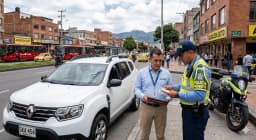
Organizing a corporate event in Colombia — whether it is a multinational conference in Bogotá, a product launch in Medellín, an incentive trip in Cartagena, or a board retreat in the Coffee Region — demands meticulous planning across dozens of operational dimensions. Among the most critical and frequently underestimated is executive ground transportation. Getting hundreds of attendees from airports to hotels, from hotels to venues, and between multiple event locations on tight schedules requires a transportation partner with the fleet capacity, operational expertise, technological infrastructure, and local knowledge to deliver seamless mobility. This guide provides corporate event planners with a comprehensive framework for organizing executive transportation in Colombia, drawing on the operational experience of Transportes Ejecutivos, which has completed over 840,000 trips serving more than 230 companies across 17+ Colombian cities.
Fleet Selection: Matching Vehicles to Event Requirements
The foundation of successful corporate event transportation is selecting the right vehicles for each segment of the operation. A typical corporate event in Colombia requires a mix of vehicle types depending on the number of attendees, the nature of activities, and the level of service expected. Executive sedans (Toyota Corolla, Hyundai Sonata) are ideal for individual VIP transfers — picking up keynote speakers, C-suite executives, or special guests from the airport and delivering them directly to their hotel or the event venue. Compact SUVs provide additional luggage capacity for travelers arriving with equipment, presentation materials, or extended-stay baggage. Executive minivans seating three to five passengers work well for small group transfers — departmental teams arriving on the same flight, for example. Executive vans and VIP vans (Mercedes-Benz Sprinter class) serve medium groups of eight to twelve with comfortable seating and onboard amenities. Large buses seating up to forty passengers are essential for shuttle operations between hotels and convention centers during multi-day events. And for top-tier VIP service, premium sedans like the Mercedes-Benz E-Class signal prestige and provide the highest level of comfort.
Airport Coordination: Managing Arrivals and Departures at Scale
For corporate events drawing attendees from multiple cities and countries, airport coordination is one of the most operationally complex transportation challenges. At Colombia's busiest airports — El Dorado (Bogotá), José María Córdova (Medellín), Alfonso Bonilla Aragón (Cali), Rafael Núñez (Cartagena), and Ernesto Cortissoz (Barranquilla) — managing dozens or hundreds of individual arrivals requires systematic planning. Best practices include collecting complete flight manifests from all attendees at least one week before the event, building a master arrival schedule that groups pickups by time windows and assigns vehicles efficiently, pre-positioning vehicles and drivers at the airport based on the arrival schedule, and establishing a communication protocol between the transportation coordinator and the dispatch center to handle flight delays, gate changes, and last-minute itinerary modifications. Meet-and-greet service — where a uniformed representative holds a sign in the arrivals hall — is standard for executive-level events and ensures attendees are connected with their assigned vehicle immediately upon clearing customs or baggage claim. Departure logistics require equal attention, with staggered pickup times from hotels and buffer time built in for security screening at the airport.
Real-Time Tracking and Communication Systems
Modern corporate event transportation in Colombia relies heavily on technology for operational control and transparency. GPS tracking of every vehicle in the fleet allows the event transportation coordinator — and often the corporate event planner — to monitor the exact location of each vehicle in real time, verify pickup and drop-off times, and respond immediately to any deviation from the planned route or schedule. Transportes Ejecutivos equips all vehicles with GPS systems integrated into a centralized dispatch platform, enabling real-time visibility across the entire operation. Communication between the event planner, the dispatch center, and individual drivers is maintained through dedicated channels — typically a combination of the dispatch platform's messaging system and direct phone or messaging app contact for urgent matters. For large events, a dedicated transportation coordinator is assigned to serve as the single point of contact, managing all communications and ensuring that any changes to the event schedule — a session running late, a dinner venue change, an unplanned excursion — are immediately reflected in the transportation operation. Post-event reports with trip data, mileage, timing, and service metrics provide valuable documentation for event organizers.
Route Planning and Venue Logistics Across Colombian Cities
Each Colombian city presents unique route planning challenges that require local expertise. In Bogotá, the pico y placa traffic restriction system limits certain license plate numbers from circulating during peak hours — corporate fleet operators must ensure all assigned vehicles are compliant on the event day. Bogotá's traffic congestion, particularly on routes from El Dorado Airport to the Corferias convention center or northern hotel districts, requires generous time buffers and contingency routes. In Medellín, the thirty-five-kilometer distance between José María Córdova Airport and the city center via the Las Palmas highway demands careful scheduling, especially during rainy season when fog can slow the mountain road significantly. Cartagena's walled old city has severe access restrictions for vehicles, requiring drop-off and pickup coordination at designated perimeter points. Cali's Alfonso Bonilla Aragón Airport is located forty minutes from the city center, and routes can vary significantly depending on traffic through Palmira. For events in smaller cities like Pereira, Bucaramanga, or Santa Marta, local knowledge of road conditions, construction zones, and festival-related closures is essential for maintaining schedules.
Cost Optimization Strategies for Event Transportation
Corporate event transportation represents a significant budget line item, and smart planning can optimize costs without compromising service quality. The first strategy is consolidation: rather than assigning individual vehicles to each VIP arrival, group attendees arriving within the same one-hour window into shared transfers using minivans or vans, reserving individual sedans only for C-suite executives and keynote speakers. The second is shuttle scheduling: for multi-day events with a primary hotel-to-venue route, operating scheduled shuttle buses on fixed thirty- or sixty-minute intervals is far more cost-effective than on-demand service and provides attendees with predictable transportation options. The third is early planning: transportation providers can offer better rates when contracted well in advance, as they can optimize fleet allocation across multiple clients and events. The fourth is local sourcing through a national partner: rather than contracting separate transportation companies in each city for a multi-city event tour, working with a single operator like Transportes Ejecutivos that has presence in seventeen-plus cities ensures consistent service quality, consolidated billing, and volume-based pricing. Finally, detailed post-event reconciliation of actual trips versus planned trips helps refine budgeting for future events.
Compliance, Insurance, and Risk Management
Corporate event planners have a duty of care to ensure that all ground transportation providers comply with Colombian transportation regulations and carry adequate insurance. In Colombia, corporate ground transportation must be operated by companies authorized by the Ministry of Transport under the special transportation modality regulated by Decreto 1079 de 2015. Each trip must be documented with a FUEC (Formato Único de Extracto del Contrato), the official trip authorization document that serves as proof of legal operation. All vehicles must carry current SOAT (mandatory traffic insurance), contractual and extracontractual liability insurance, and valid technical-mechanical inspection certificates. Drivers must possess valid professional licenses with the appropriate category for the vehicle they operate. Transportes Ejecutivos maintains full regulatory compliance across its entire fleet, holds Bureau Veritas certification as a biosafe transport company, and provides corporate clients with complete documentation upon request. For international corporate event planners unfamiliar with Colombian regulations, working with a fully compliant national operator eliminates the legal risk of contracting unauthorized or underinsured transportation providers — a surprisingly common pitfall that can result in significant liability exposure.
FAQ
Planning executive transportation for your next corporate event in Colombia?
Over 840,000 trips and 230+ corporate clients trust Transportes Ejecutivos. Contact us for a customized event transportation proposal.